

Key Takeaways
- Top cell tower REITs like American Tower, Crown Castle, SBA Communications, DigitalBridge, and Uniti Group provide a mix of exposure to global and regional telco infrastructure.
- These REITs earn consistent income from long-term leases with the country’s largest wireless carriers, providing a solid foundation for steady revenue and future growth.
- Growing portfolios through acquisitions and new site development is a typical play that assists these firms in addressing the soaring desire for connectivity.
- Its assignment is to develop innovative leasing models and diversified assets, such as cell towers, small cell nodes, and fiber networks, that create flexibility for both investors and wireless service providers.
- Several of these REITs have a history of paying steady dividends, which attracts income-focused investors looking for dependable returns.
- Investors interested in this sector may want to consider each company’s growth projects, financial condition, and exposure to high-growth digital infrastructure markets.
What Are Cell Tower REITs?
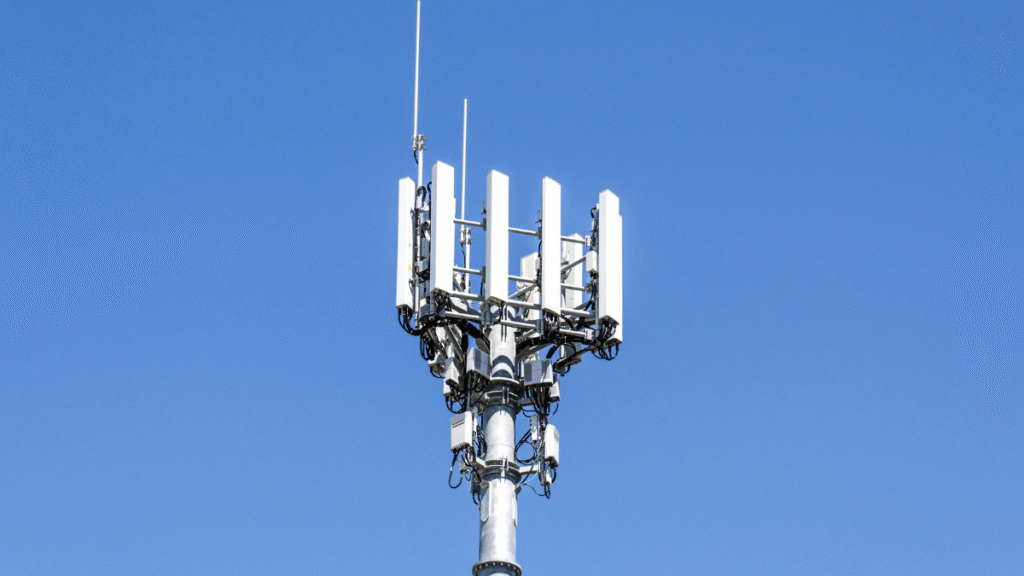
Cell tower REITs investing means putting your money into real estate investment trusts that own telecommunications towers. These REITs generate stable revenue from long-term leases with mobile carriers and technology companies.
Many investors are drawn to cell tower REITs because of their robust cash flow and resilient demand. Growth from increasing data usage globally makes them even more attractive.
To help you make informed choices, this article breaks down the leading cell tower REITs and analyzes their key characteristics.
1. American Tower Corporation (NYSE: AMT)
American Tower stands as one of the biggest and most established players in the cell tower REIT arena. With tens of thousands of communication sites, AMT plays a critical role in enabling mobile networks around the globe.
Global Footprint and Operations
The company operates and owns sites across North America, Latin America, Africa, Asia, and Europe. This gives it a truly global footprint.
Take AMT’s presence in India and Brazil, for example. The company has built a strong footprint by partnering with local carriers and adapting its sites for various network needs.
AMT’s portfolio extends beyond traditional cell towers. The company operates rooftop antennas and distributed antenna systems that provide network strength in dense urban locations and stadiums.
These systems help operators provide consistent coverage in locations where constructing towers isn’t feasible. This combination of towers and antennas provides additional opportunities to serve wireless carriers, internet providers, and even government agencies.
For investors, this means AMT’s business isn’t dependent on any single market or technology. This diversification can help stabilize performance across different geographic areas and technology segments.
Revenue Model and Long-Term Leases
A major reason for AMT’s consistent growth is its revenue model. The company enters into long-term leases with major wireless companies, including Verizon, AT&T, and Vodafone.
These leases frequently run for 5 to 10 years or more. This provides AMT with a stable revenue stream that’s less subject to short-term market fluctuations.
When a carrier signs up for tower space, they typically commit to annual rent escalators. They also pay to augment facilities as the network expands.
This allows AMT to maintain robust cash flow and forecast it accurately. The company’s growth numbers prove this strategy works, with revenue increasing year over year in many of its markets.
Growth Strategy and Market Expansion
Growth is a major part of AMT’s strategy. The company leverages its scale to acquire new tower portfolios and fund cutting-edge network technology.
In recent years, AMT has acquired sites from smaller operators. It has also expanded into new markets, such as Africa and Southeast Asia.
These efforts contribute to increasing its site inventory and accessing new customers who need expanded network coverage. AMT invests heavily in upgrades, like installing 5G-ready equipment or deploying small cells in dense urban areas.
These moves demonstrate a commitment to staying at the forefront as wireless needs continue to increase.
Key Metrics: American Tower Corporation
Ticker Symbol: AMT
Market Cap: ~$95 billion (as of late 2024)
Total Sites: 225,000+ communication sites globally
Geographic Presence: North America, Latin America, Africa, Asia, Europe
Typical Lease Term: 5-10+ years
Major Tenants: Verizon, AT&T, T-Mobile, Vodafone
Dividend Yield: ~3.2% (varies with market conditions)
Revenue Model: Long-term leases with annual escalators
Learn more about American Tower’s investor relations.
2. Crown Castle International (NYSE: CCI)
Crown Castle is a powerhouse in the U.S. telecommunications infrastructure market. The company specializes in owning and operating communications assets such as cell towers, small cells, and fiber.
Company Background and Focus
CCI has been around for a long time. It started as Crown Communications in 1980.
Over the years, the company expanded its portfolio and refined its strategy. Today, CCI focuses exclusively on the American market, particularly after divesting its Australian holdings in 2015.
This domestic emphasis is evident from almost 100 offices nationwide and a workforce of around 5,000 people.
Network Infrastructure
CCI’s network is among the industry’s largest. As of 2024, it operated more than 40,000 cell towers and almost 85,000 route miles of fiber supporting small cells and fiber systems.
This wide footprint enables the company to supply the growing demand for mobile data and wireless connectivity in urban and suburban markets.
When mobile users stream video or use cloud-based apps, much of that activity depends on Crown Castle’s infrastructure. The company’s small cell nodes are crucial for extending 5G networks to areas requiring dense coverage.
Flexible Leasing Models
Crown Castle’s leasing models provide wireless service providers with tremendous flexibility. Instead of being locked into long-term, fixed contracts, CCI works with providers to scale their infrastructure needs up or down.
This flexibility allows telecommunications carriers to adjust to shifts in technology and demand without incurring large, upfront expenses.
For example, a wireless company deploying coverage in a new region can lease tower space or fiber from CCI on demand. This facilitates network expansions or upgrades on a more fluid timeline.
Dividend History and Growth Strategy
Crown Castle has earned a reputation as a consistent dividend payer. This appeals to income-focused investors.
Its REIT status means it must distribute a significant portion of its taxable income as dividends. Through the years, CCI has maintained its pattern of regular dividend increases, making it attractive to income-seeking investors.
The company grows through strategic acquisitions, including Global Signal Inc., NextG Networks, and Lightower. These deals have increased its footprint and network capacity.
Key Metrics: Crown Castle International
Ticker Symbol: CCI
Market Cap: ~$42 billion (as of late 2024)
Cell Towers: 40,000+
Fiber Network: 85,000+ route miles
Geographic Focus: United States only
Employees: ~5,000
Small Cell Nodes: Extensive deployment across urban areas
Dividend Yield: ~5.5% (varies with market conditions)
Major Customers: All major U.S. wireless carriers
Visit Crown Castle’s official website for more information.
3. SBA Communications Corporation (NASDAQ: SBAC)
SBAC is a major player in the cell tower REIT space, renting space on communication towers to wireless carriers. The company ranks as the third-largest wireless tower company in the U.S.
Portfolio and Geographic Reach
SBAC has a market cap of approximately $22 billion. Its footprint includes almost 30,000 towers throughout the Western Hemisphere, from Canada all the way to Argentina and Chile.
The company’s business model revolves around leasing tower space to telecommunications operators. These leases typically last 5 to 15 years, with annual rent escalators.
This arrangement provides SBAC with consistent, recurring revenue. The co-location aspect allows multiple carriers to share the same tower, boosting occupancy rates and revenues.
Strategic Partnerships
A significant part of SBAC’s success stems from its partnerships with large telecommunications operators. Major players such as AT&T and Verizon sign long-term contracts that keep SBAC’s income streams solid and predictable.
By working with leading wireless carriers, the company can secure years of revenue. This stability doesn’t necessarily happen in other real estate industries.
When a new 5G rollout occurs, these operators often need to upgrade their networks. This usually involves leasing more space on SBAC towers.
Growth Through Acquisition and Development
SBAC’s growth comes from a combination of acquiring existing towers and building new sites. The company focuses especially on areas where mobile data traffic is exploding.
The demand is fueled by the requirement for faster networks, particularly with the 5G launch. SBAC’s portfolio continues to expand with tower acquisitions across developed and emerging markets.
The company has demonstrated a talent for identifying growth opportunities in areas such as Brazil and Central America. In these regions, mobile adoption is increasing rapidly.
SBAC’s management has highlighted recent increases in applications from its largest customers. This suggests a more robust second half of 2025 and beyond.
Financial Performance
On the financial side, SBAC reports high occupancy rates and consistent rent increases. This translates into dependable income for investors.
Part of the company’s strategy involves returning capital to shareholders via stock buybacks and dividends. Throughout the last 12 months, SBAC has maintained a diverse portfolio and strong carrier relationships.
These factors help insulate the company from unexpected market fluctuations. However, the strong U.S. Dollar is expected to reduce site leasing revenue by approximately $25 million in 2025, showing that currency flows do matter.
Key Metrics: SBA Communications Corporation
Ticker Symbol: SBAC
Market Cap: ~$22 billion (as of late 2024)
Tower Portfolio: 30,000+ towers
Geographic Coverage: Western Hemisphere (Canada to Argentina/Chile)
Lease Terms: 5-15 years with annual escalators
Major Tenants: AT&T, Verizon, T-Mobile, regional carriers
Occupancy Rate: High (multi-tenant co-location model)
Currency Impact: ~$25M revenue headwind from strong USD in 2025
Capital Returns: Stock buybacks and dividends
Check out SBA Communications’ investor information.
4. DigitalBridge Group (NYSE: DBRG)
DigitalBridge Group’s appeal lies in its digital infrastructure focus, with cell tower assets comprising a significant component of its portfolio.
Business Model and Focus
DigitalBridge, also known as DBRG, operates as a global investment firm focusing on wireless networks, data centers, and fiber. Unlike typical REITs, DBRG takes a broader approach, targeting assets that power the modern digital economy.
The company’s mix of cell towers, fiber lines, and data centers represents a clear bet on the rapid growth of digital services.
Investment Strategy
DBRG’s approach focuses on investing in high-growth sectors. The company particularly targets sectors associated with increasing data consumption and wireless communications.
For example, its $11 billion acquisition of Switch, Inc., a Las Vegas data center company, underscores its drive into cloud storage and digital connectivity.
The company’s active fundraising efforts support this expansion. DBRG closed its second flagship fund with $8.3 billion in early 2022.
DataBank, a key portfolio company, raised $2.0 billion in October 2024. This illustrates the scale at which DBRG operates and its capacity to attract substantial capital.
Market Opportunity
The company’s strategy capitalizes on the global need for faster, more dependable connections. As video streaming, mobile apps, and cloud services become increasingly popular, demand for cell towers and data centers keeps rising.
DBRG’s investments seek to enable this shift. By acquiring infrastructure that enhances wireless networks, DBRG helps telecommunications carriers service denser cities and expand into rural areas.
ESG and Digital Equity
The firm is highly mindful of ESG standards. Its aim is to close the digital divide, bringing high-speed internet and data services beyond major cities to underserved areas as well.
Financial Performance
DBRG’s growth is evident in its numbers. In 2021, the firm posted consolidated revenues of $252 million—more than twice what it recorded a year earlier.
This leap reflects its transformation under new leadership, which guided the company fully into digital infrastructure. Since then, DBRG has maintained robust momentum, acquiring and investing in networks to keep pace with evolving technology demands.
Key Metrics: DigitalBridge Group
Ticker Symbol: DBRG
Market Cap: ~$3 billion (as of late 2024)
Business Model: Global investment firm (digital infrastructure)
Asset Focus: Wireless networks, data centers, fiber, cell towers
Major Acquisitions: Switch, Inc. ($11B), DataBank investments
Flagship Fund: $8.3B (closed in early 2022)
2021 Revenue: $252M (more than 2x year-over-year growth)
ESG Focus: Digital divide closure, connectivity expansion
Geographic Reach: Global operations
Learn about DigitalBridge’s investment approach.
5. Uniti Group Inc. (NASDAQ: UNIT)
What differentiates Uniti Group is its concentration on providing infrastructure for wireless and fiber networks. This positions it at a crucial intersection in the telecommunications industry.
Infrastructure Assets
UNIT focuses its business on essential infrastructure. The company possesses approximately 140,000 route miles of fiber as of early 2024.
That reach supports a vast spectrum of telecommunications requirements, from dense urban networks to rural connections where coverage continues to expand.
The company serves as a bridge for wireless carriers and internet providers to lease both fiber and tower assets. This keeps people and businesses connected across diverse markets.
Revenue Model and Customer Diversification
Revenue streams at Uniti Group are designed to be robust and diverse. The company’s income comes from leasing its fiber and tower assets to a variety of telecommunications firms, not just one or two providers.
UNIT had one major customer in 2015. Now, the company serves approximately 26,000 customer connections.
That leap demonstrates how the company has diversified its risk across multiple tenants and locations. Almost all of the agreements are long-term, triple-net leases.
Under this structure, UNIT’s tenants cover insurance, taxes, and maintenance. This provides steady, reliable income for the company.
For instance, its master lease agreement with Windstream has helped anchor its revenue. This stability remained even when challenges arose during Windstream’s 2019 bankruptcy.
Strategic Partnerships
Strategic partnerships are a significant part of UNIT’s approach to staying relevant and growing. Partnering with large wireless and fiber carriers allows UNIT to fill coverage gaps and strengthen service for collaborators.
These partnerships frequently involve leased fiber paths that support next-generation networks. This includes 5G deployments in urban centers and underserved areas.
When telecommunications providers want to extend their coverage but prefer not to build from the ground up, these partnerships make UNIT a go-to option.
Financial Discipline
Financial discipline is apparent in UNIT’s operations. Despite the disruption from Windstream’s bankruptcy and a forecasted net loss of around $45 million in 2024, UNIT has maintained a solid balance sheet.
The firm’s monthly churn—customers leaving—remains below 0.5%. This indicates consistent demand for its offerings.
At the same time, UNIT seeks growth by addressing underserved markets where fiber networks are absent but demand for enhanced connectivity is increasing.
Key Metrics: Uniti Group Inc.
Ticker Symbol: UNIT
Market Cap: ~$900 million (as of late 2024)
Fiber Network: 140,000+ route miles
Customer Connections: ~26,000 (up from 1 major customer in 2015)
Lease Structure: Long-term, triple-net leases
Monthly Churn Rate: Below 0.5%
2024 Forecast: Net loss of ~$45M (despite strong underlying demand)
Major Partnership: Windstream (master lease agreement)
Growth Focus: Underserved markets and 5G infrastructure
Visit Uniti Group’s investor page for more details.
Conclusion
Cell tower REITs provide investors with a way to participate in the growth of mobile usage and data demands. Companies such as American Tower, Crown Castle, SBA Communications, DigitalBridge, and Uniti all make tangible contributions to this ecosystem.
Some focus on steady rental income from major carriers. Others emphasize new technology and fiber connections.
These investments are about more than just following the trends in wireless usage. They provide a clear pathway for consistent income and expansion potential.
To really extract value from these investments, stay on top of their quarterly updates and earnings calls. See how they manage risks and pursue new deals.
If you want to stay ahead of the curve, keep watching this space. Consider the options that best suit your investment style and risk tolerance.
For additional research on REIT investing, check out resources from NAREIT (National Association of Real Estate Investment Trusts) and the SEC’s investor education materials.
Frequently Asked Questions
What are cell tower REITs?
Cell tower REITs are real estate investment trusts that own and operate towers for wireless communication. They rent space on these towers to mobile operators and other tenants, producing reliable rental revenue.
Why invest in cell tower REITs?
Cell tower REITs provide both stable cash flow and potential long-term growth. As global demand for mobile data grows, these companies could benefit from increased leasing activity and network expansion.
How do cell tower REITs make money?
They collect rent by leasing antenna space on their towers to telecommunications companies. They frequently have long-term leases, providing stability to the REITs’ income streams.
Are cell tower REITs affected by technology changes?
Yes, technology changes can affect them. The growth of 5G and increasing mobile usage tend to generate more demand for tower space, reinforcing their business model.
What are the risks of investing in cell tower REITs?
Risks include tenant concentration, regulatory changes, and technological shifts. Interest rate fluctuations and competition may also impact financial results.
How do cell tower REITs differ from traditional REITs?
Cell tower REITs invest in digital infrastructure, not apartments or office buildings. Their revenue comes from long-term leases with communications firms, not retail or office tenants.
Are cell tower REITs suitable for global investors?
Yes, many of these REITs have international operations and can provide geographic diversification. Investors should check their local regulations and assess any currency risk before investing.